
 Book consultation



Many people hesitate to work overtime because they believe earning more will push them into a higher tax bracket—and suddenly all their income will be taxed at that higher rate.
In Canada, that’s a common myth. In reality, our tax system is progressive, which means only the income within each bracket is taxed at that bracket’s rate.
Let’s break it down in real numbers so it actually makes sense.
How Canadian Tax Brackets Work
Canadian tax brackets are structured in layers. As your income increases, it moves through each bracket, but only the portion within each bracket gets taxed at that bracket’s rate. Think of it as a staircase—the higher you go, the more you pay on that step, but not on the lower ones you’ve already climbed.
Here’s how the 2026 federal tax brackets look:
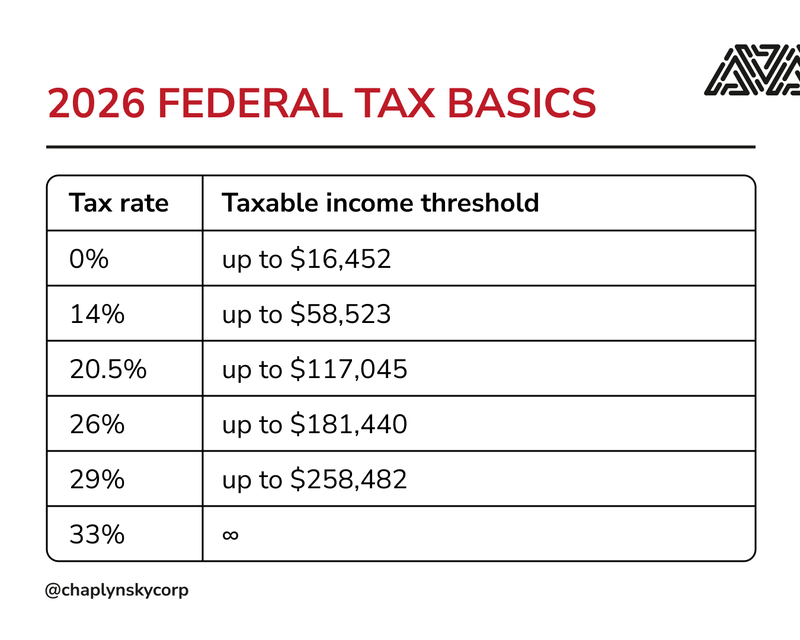
Each portion of your income is taxed at the rate for the bracket it falls into—not all income at the highest rate you reach.
Example
To see this in action, imagine someone earning $124,750 in a year:
- The first $16,452 is taxed at 0%
- The next $42,071 is taxed at 14%
- The following $58,522 is taxed at 20.5%
- The last $7,705 is taxed at 26%
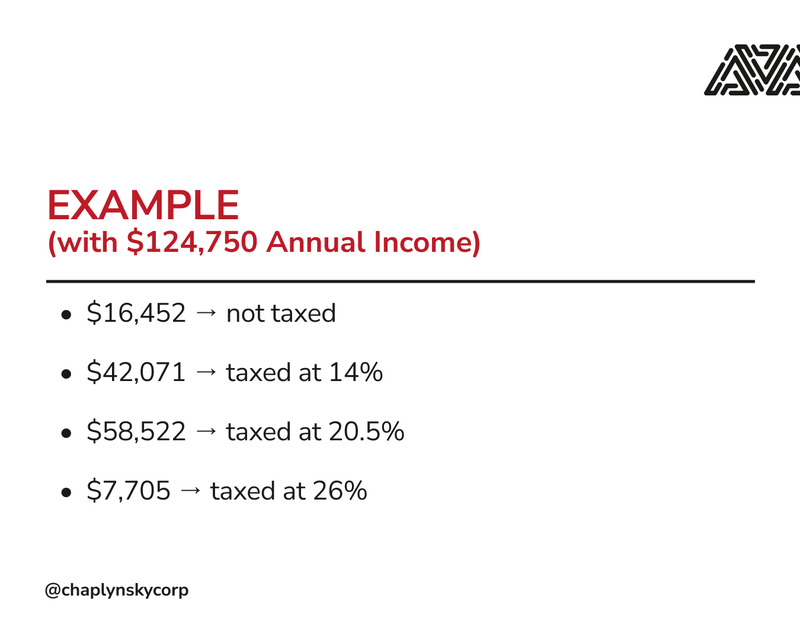
After calculating these layers, this person’s payable comes to $19,890.25 (before other credits), leaving a take-home pay of $104,859.75.
The Big Lesson
Earning more never increases the tax rate on your entire income. You only pay higher rates on the portion that falls within the higher brackets. That means taking overtime or pursuing higher earnings usually still puts more money in your pocket—even after taxes.
Downloads
Supplemental Resources

Canadian Tax Brackets.pdf
Turning down overtime because of taxes? You may be leaving money on the table.